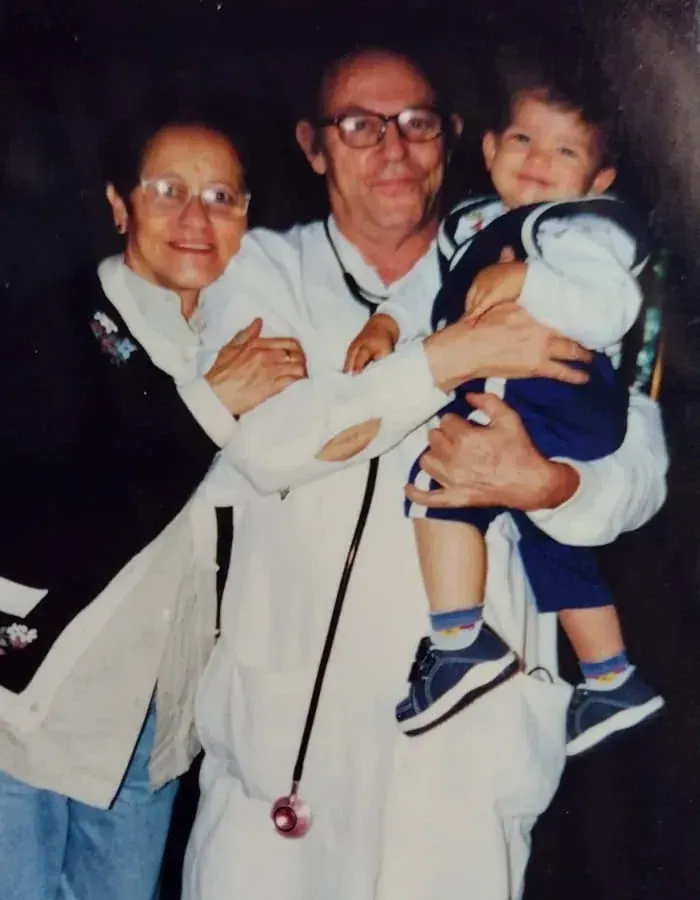
The youngest patient
A child of two years and eight months, a distended belly and a surgical decision he never forgot.
“He was my youngest patient ever.”Read this story
Physician, surgeon and professor. For more than forty years he saw whoever knocked on the door of his practice in Campo Limpo, São Paulo, without asking who could pay.
Scroll to explore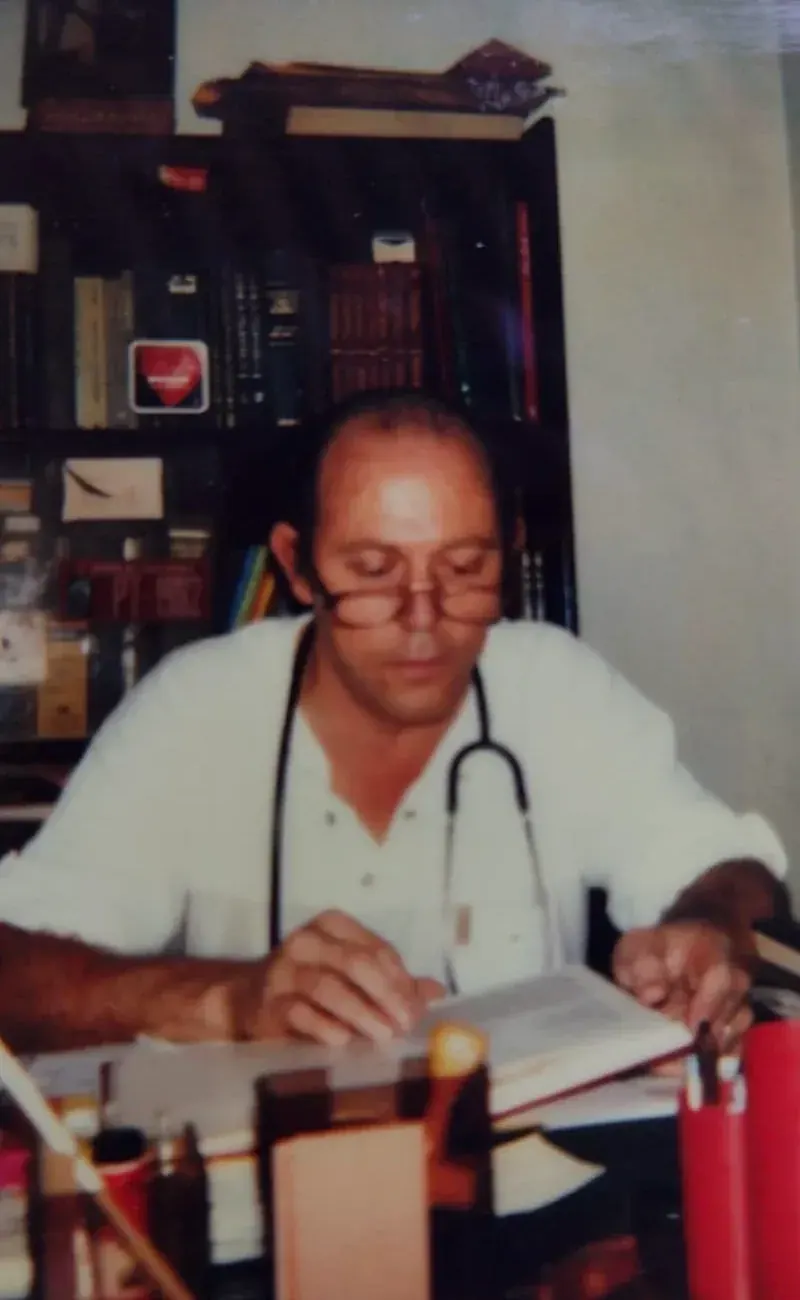
“You don't know her life, so don't criticise her.”
Pedro Moretti Guedes, to someone who criticised a patient who couldn't pay
Sixth child of a railway worker, he graduated in Sorocaba in 1963, trained at the Hospital das Clínicas, operated, taught surgery, wrote for neighbourhood newspapers and coached swimmers. This memorial gathers what the family kept: photographs, documents, texts and the stories he used to tell.
A private consultation was not cheap. Even so, when someone without means came to the clinic, Pedro treated them with the same care and charged nothing. He made no banner of it: he made it routine. Money was never the reason. People were.
The woman who could not always pay went on being seen. The criticism got a sentence, not a bill.
"He did not mind whether they were upper or lower class; what mattered to him was the patient's recovery", his patients wrote.
A hug at the door, classical music, coffee and the patience to hear each one. "Sometimes we didn't even need medicine."
Faced with a difficult meningitis diagnosis, he credited the attentive mother who insisted something was wrong.
The biography, from the 1935 birth certificate to the office where he most liked to be.
02Ten episodes he used to tell: the youngest patient, the mother who sensed meningitis, the pharmacy.
03Hospital das Clínicas, SAMDU, surgery, teaching and a defence of humane care.
04Twenty-four texts on public health and prevention published between 1992 and 2008.
05Thirty-two photographs and eleven documents restored for preservation.
06What patients, friends and students wrote about him.
In the reminiscences he left, Pedro rarely spoke of technique. He spoke of people: an attentive mother, a 96-year-old Russian gentleman, a driver he could not save.
A child of two years and eight months, a distended belly and a surgical decision he never forgot.
“He was my youngest patient ever.”Read this story
At the other end of life, a 79-year-old man arrives with appendicitis. Years later he seeks him out in São Paulo.
“I received an elderly patient, 79, with appendicitis.”Read this story
An empty emergency room, an ambulance, a young woman in severe abdominal pain and the speed an emergency demands.
“In an empty ER, at two in the morning...”Read this story
A driver with a gunshot wound whom he recognises from a hospital visit days earlier, when the man was with his wife and newborn son.
“It was the first time I cried at a patient's death.”Read this story
A small office above a bakery, a 96-year-old gentleman with a fractured femur and the referral that made the neighbourhood trust the new doctor.
“From then on, it "rained" patients.”Read this story
A patient asks for help losing weight. The physical examination reveals changes in the lungs. The diagnosis is tuberculosis.
“Some time later he came to my office and cried.”Read this story
A woman who brought her child to the office and could not always pay. Faced with criticism, Pedro answered with the sentence that sums up his way.
“You don't know her life, so don't criticise her.”Read this story
A three-year-old worsens quickly. The examination shows no clear signs, but the mother insists. Pedro listens, sends them to the Emílio Ribas, and the diagnosis is meningitis.
“It was you, a good and careful mother, who alerted me to how serious the illness was.”Read this story
Called urgently to a pharmacy, he finds a woman collapsed after an allergic reaction. Immediate care, emergency measures and a hug of relief.
“The pharmacist hugged and kissed me.”Read this story
A phrase attributed to a priest friend sums up the impression Pedro's dedication left on those who saw him work.
“I know I am the priest, but the true minister is Pedro.”Read this story
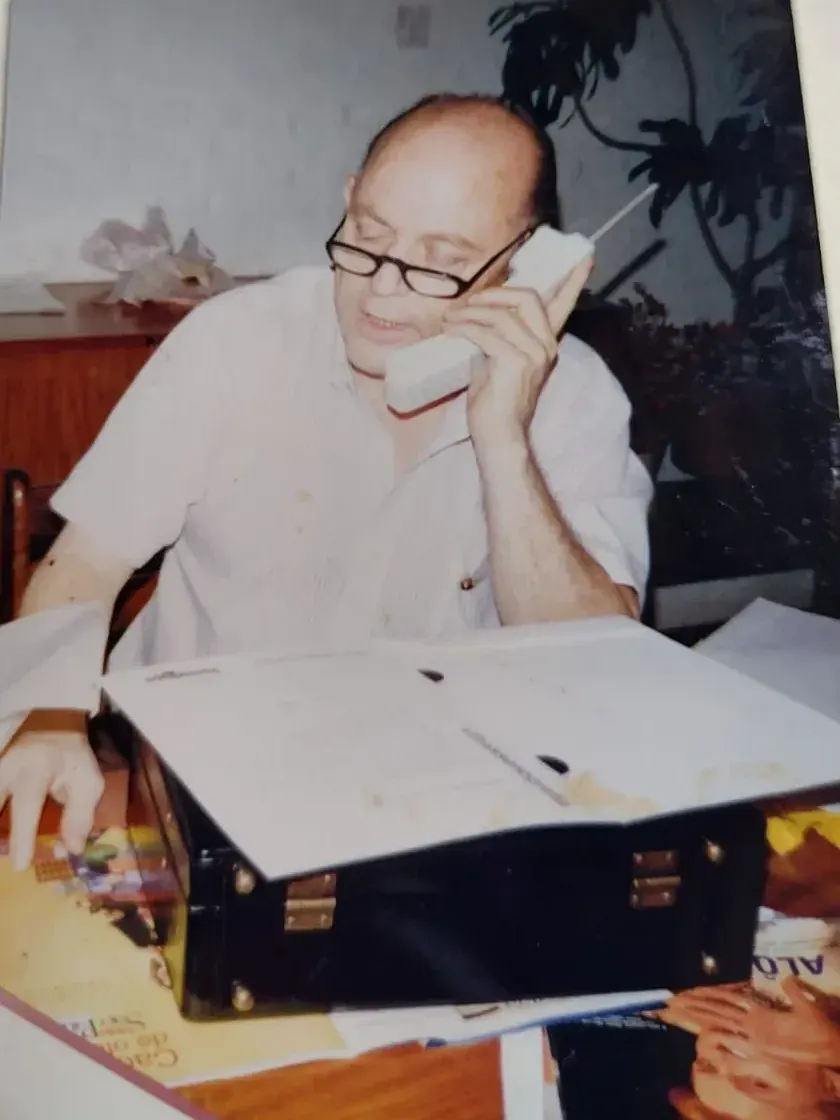
Pedro arrived in Campo Limpo in 1967. In 1998 the Diário Popular reported that he had already served the neighbourhood for thirty years as a clinician, surgeon for adults and children, and family doctor. The Clínica Médica Campo Limpo stood at Rua Dr. Avelino Lemos Jr., 67.
Campo Limpo and PedroEvery milestone below has a source: a certificate, a newspaper report, a clipping or a family record.
Sixth child of Maria Luiza Moretti Guedes and José Anthero Guedes, a railway worker. The certificate is drawn up on 26 September in the Bom Retiro district of the capital, stamped by the State Railway Workers' Fund.
Completes his medical degree, according to a historical report kept by the family.
Settles in the south of São Paulo and begins a relationship with the neighbourhood that would span more than four decades.
Surgeon for adults and children at the Clínica Médica Campo Limpo. Professor of Surgical Technique and Abdominal Surgery at Universidade São Francisco, Bragança Paulista.
The family gathers stories, articles, documents and photographs in a dated compilation.
Aged 74 years and five months. The seventh-day mass is celebrated in Campo Limpo on 25 February, with a tribute read by relatives, friends and patients.
At the seventh-day mass, on 25 February 2010, relatives, friends and patients read a handwritten tribute. It begins like this:
Read the tributesFelipe Guedes did not grow up with his father. He knows Pedro through the stories, and loves him for them. What he keeps most is the doctor who treated for free those who could not pay: a way of looking at people, not at money, that Felipe carries with him.
Meet Felipe Guedes